
You finally had your color analysis done. You left the consultation with your personalized palette, full of enthusiasm and a clear vision for your wardrobe. Or so you thought.
But then what happens? You find yourself staring blankly at your closet, paralyzed. Maybe you start compulsively buying anything in “your” colors. Or, even worse, you feel trapped, thinking you can “never” wear what you love again.
Breathe. You’re not alone. 💙
After over 10 years in the field and more than 2000 consultations, I can tell you this: these are the 5 mistakes I see EVERYONE make after their color analysis. The good news? All of them can be avoided.
I’ll share each one with you — honestly and without judgment (I made them myself, too!) — and most importantly, I’ll show you how to fix them.
Ready? Let’s go!
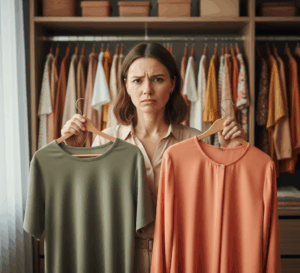
❌ MISTAKE #1: Throwing Out Your Entire “Wrong” Wardrobe
Why does it happen?
You finish your consultation convinced that you need to get rid of everything that isn’t in your palette. That beige sweater you’ve loved for years? Gone. The perfect black blouse? Trash. That favorite green dress that makes you feel beautiful? Goodbye.
It’s understandable: you just learned that certain colors “drain” you — and you want to wear only what makes you shine 100%. The problem? You’re overdoing it.
Why is this a mistake?
-
Financial: Replacing your wardrobe is expensive! We’re talking thousands of euros to change everything.
-
Emotional: Some clothes have sentimental value beyond color — your grandma’s coat, the shirt from your first day at work, etc.
-
Practical: There are ways to wear “wrong” colors without hurting your look. Not everything is black or white (in fact, black and white are the most controversial colors in color analysis!).
-
Sustainable: Throwing out everything is a huge waste, especially when we should all be more aware of fashion’s environmental impact.
How to fix it:
✅ Keep “wrong” colors you love, but wear them strategically:
-
Away from your face: Pants, skirts, or shoes in non-palette colors? No problem! Just keep your face framed with scarves, tops, or accessories in your best colors.
-
With strategic accessories: That warm brown top you love but you’re a cool type? Wear it with a scarf in your colors to create distance from your face.
-
For specific occasions: Loungewear, pajamas, and sportswear can be any color — you’re not interviewing in them!
✅ Make gradual changes:
-
Don’t toss everything at once.
-
Set aside “wrong” pieces you don’t love anymore anyway.
-
Keep the ones you cherish or that are still useful.
-
From now on, buy new things only in your best palette.
Over 1-2 years, your wardrobe will transform naturally — no waste, no financial shock.
✅ Remember: color analysis is a tool to help you shine, not a prison!
Example:
Julia is a Soft Summer who loves her camel coat (a typical Autumn color, so “wrong” for her).
Solution: She wears it with a light grey scarf (perfect for her), creating distance from her face.
Result: She keeps what she loves and still looks her best — win-win! ✨
❌ MISTAKE #2: Treating the “Rules” As Absolute
Why does it happen?
After a consultation, we often think: “I’m a Winter, so ONLY cool, deep colors FOREVER. Full stop!” The “rules” feel set in stone. No shades, no exceptions, no wrong greys (unless it’s charcoal and you’re a Winter! 😄).
Why is this a mistake?
Here’s the truth: color analysis is part science, part art — not pure math.
-
People are complex: If you’re a Winter, it doesn’t mean you’re exactly like another Winter. We’re not color robots!
-
Context matters: A color that “drains” you in daylight might look amazing in artificial light or if you change your makeup or styling.
-
Personal energy matters: Two Winters in the same shade of cherry red may look completely different based on confidence and energy.
-
Shades exist: Not all reds are created equal. There are literally 50 shades of red, and even in your best season, some will work better for YOU.
How to fix it:
✅ Think in shades, not in black and white:
-
Don’t use “Allowed” / “Forbidden.”
-
Instead, rate like this:
-
“This is amazing for me.”
-
“This is quite good.”
-
“This doesn’t do much for me.”
-
“This really doesn’t flatter me.”
It’s a spectrum, not a switch!
✅ Experiment mindfully:
-
Try various shades (if you’re a Summer, see which blues truly suit you best).
-
Notice how colors change with light, makeup, styling.
-
Take photos and compare!
✅ Trust your instincts (with awareness):
-
If a “right” color from your palette feels wrong, you don’t have to force yourself.
-
If a “wrong” color makes you glow in some situations, keep it and wear it with intelligence.
Example:
Sara has warm, bright colors. “Rules” say: “No black, too harsh!”
But with:
-
Bold makeup (coral lipstick, eyeliner),
-
Gold accessories,
-
Real confidence…
She rocks a black dress.
Why? Context (evening, not day), styling (gold not silver), attitude (confidence, not insecurity).
Bottom line: The rules are guidelines, not laws! 💡
❌ MISTAKE #3: Ignoring Style Essences
Why does it happen?
After color analysis, we often think we’ve solved it all. We buy the “right” colors and… just wait for a magical transformation.
But something still feels off. You look in the mirror and think: “The colors are right, but… why do I still feel out of place?”
Spoiler: You’re missing half the puzzle! 🧩
Why is this a mistake?
As I explained in “Why Color Analysis Alone Isn’t Enough”, here’s the reality:
Color analysis enhances your FACE.
Style essences enhance your BODY and ENERGY.
They’re both key and must work TOGETHER!
You can have flawless colors, but if your shapes, lines, fabrics, and details don’t match your style essence, you’ll still feel “off” or like you’re wearing someone else’s clothes.
Example (real story!):
Julia, age 32:
-
Color analysis: Deep Winter
-
Perfect colors: Black, charcoal, icy white, cherry red
-
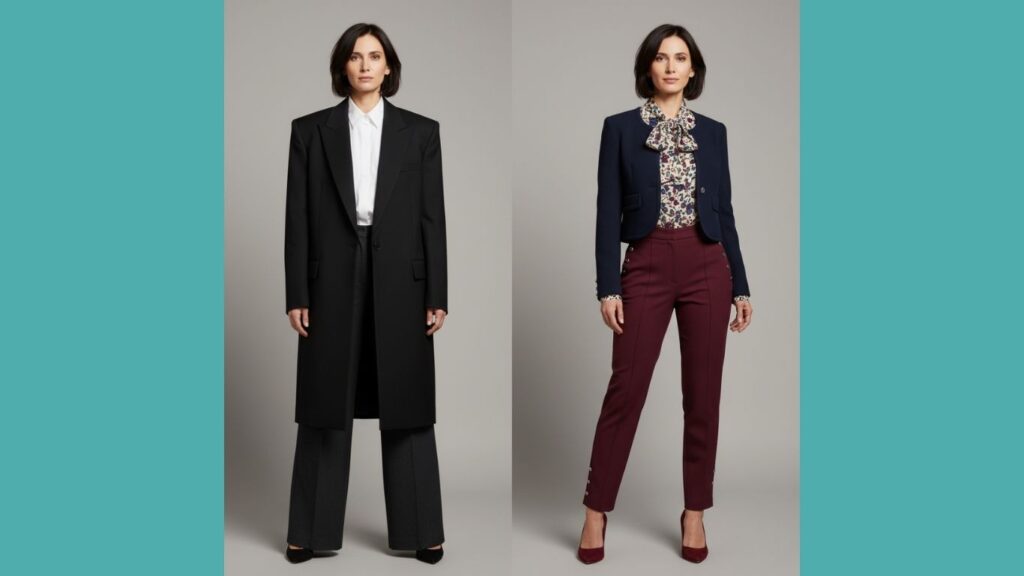
What she buys: Rigid black blazer, severe dramatic lines, power-woman vibe
-
Result: She looks harsh, distant, older by 10 years
The problem? Julia is a Soft Gamine — she needs soft lines, round shapes, playful detail, upbeat energy. Dramatic lines are her opposite!
Solution:
Same color (black), but:
-
A blazer with soft lines
-
Round buttons and playful prints or details
-
Softer fabrics (less stiff)
-
Less severe styling
Result: She’s elegant, approachable, and finally herself! ✨
How to fix it:
✅ Discover your style essences:
The 7 main essences are:
-
Dramatic: Straight lines, angles, statement pieces
-
Natural: Relaxed, textured, comfortable
-
Classic: Clean, simple, timeless
-
Romantic: Curved, soft, feminine
-
Gamine: Playful, contrast, quirky details
-
Ingenue: Sweet, delicate, youthful
-
Ethereal: Ethereal, flowy, dreamy
✅ Integrate color + style:
Don’t just ask, “WHICH color?”
Ask: “HOW do I wear it?” (shape, line, fabric, energy)
✅ Consider a complete journey:
Color analysis + Style analysis = authentic, harmonious style
You can’t reach your destination with half a map!
💡 Want more? Check “Why Color Analysis Alone Isn’t Enough (and What You Really Need)”
❌ MISTAKE #4: Relying Only on Online Quizzes
Why does it happen?
Online tests are free, fast, and convenient. You can do them from your couch, in pajamas — what’s better?
And you might wonder: “Do I really need to pay for a professional consultation? Can’t I just figure it out free online?”
Why is this a mistake?
Here are huge problems with DIY online tests:
-
Screen lighting: On-screen colors are completely distorted; your phone or laptop can’t show true shades.
-
Photo quality: Instagram filters, lighting at home, camera quality… all these can totally change a result. A warm-lit photo might make a true Winter look like a Spring!
-
Generic algorithm: Online tests can’t see nuances or hybrids; you’re reduced to a math formula.
-
No expert eye: Only years of hands-on experience can catch those details that matter most.
-
Binary results: “You’re a Spring!” — but you don’t know which sub-type, or how to use that knowledge practically, or how to adapt it to your life.
End result?
You may get your palette completely wrong — and spend hundreds on clothes that don’t work for you. So-called savings become real waste. 💸
How to fix it:
✅ Use online quizzes as a STARTING POINT only, not the gospel truth:
Great for understanding concepts, beginning to observe yourself, or getting a general idea (warm vs cool, light vs deep).
Not good for: blind trust, investing in a wardrobe based solely on them.
✅ Invest in a personal consultation (at least once in your life!):
It saves time (no more guessing), stops you wasting money on the wrong colors, and saves a ton of frustration.
✅ If you truly can’t afford a pro consult right now:
-
Do lots of research (from experts!)
-
Try things out, but don’t buy everything straight away
-
Notice comments and compliments, and take outfit photos
-
When you can, invest in a pro — it costs less than a few wrong shopping sprees!
How to spot a trustworthy color consultant:
-
Certified training
-
Real client portfolio
-
Verified testimonials
-
No “miracle promises”
-
Doesn’t tell you to toss everything you own
-
Explains the process, not just the result
-
Is empathetic, not a drill sergeant
❌ MISTAKE #5: Ignoring Your Lifestyle
Why does it happen?
You finish your consultation with a gorgeous palette: peach, mint, lavender, coral, lemon yellow…
But maybe you work in a formal office where the only acceptable colors are navy, grey, and black.
Or you learn that your “perfect” color is fuchsia, but your style is minimal and neutral, so you feel ridiculous in bright shades.
Result? The palette sits in a drawer and goes unused. Your investment is wasted.
Why is this a mistake?
Color analysis MUST fit your real life, not just be a beautiful but impractical theory.
If your best colors don’t fit:
-
❌ Your job (dress code, professional context)
-
❌ Your personal style (minimal vs eclectic, neutral vs colorful)
-
❌ Your social context (city life vs countryside, formal vs casual)
-
❌ Your personality (introvert vs extrovert)
…you simply won’t wear them.
And all your investment (money, time, energy) will have been for nothing.
How to fix it:
✅ Talk to your consultant BEFORE your analysis:
A real professional will ask about your job, style, lifestyle, preferences and blocks.
You’ll get colors tailored to YOUR life, not just theoretically perfect on paper.
✅ Find smart compromise:
-
Work in corporate? Use your colors for shirts, accessories, makeup and nail polish; keep suits neutral.
-
Minimal/neutral style? Use the most neutral shades from your palette, and add color in subtle ways.
-
Casual/sporty life? Embrace your brightest colors for weekends, athleisure, or accessories.
✅ Personalize your palette:
You don’t need to wear all 30-40 shades. It’s impossible!
Instead:
Pick 10–15 colors that:
-
You truly love
-
Fit your life
-
Make you feel like YOU
Those become your “signature colors.” Build your wardrobe around them.
Example:
Laura is a Light Spring (warm, bright, lively: coral, turquoise, yellow-gold, lime…).
She works in banking with a strict dress code.
Solution:
-
Base: Navy blazer (universal neutral)
-
Blouse: Soft peach (her color, but office-appropriate)
-
Accessories: Gold jewelry (perfect for Spring), tan bag
-
Makeup: Coral lipstick, peach blush
Result: Professional and radiant. Perfect balance! ✨

🎯 CONCLUSION: Color Analysis Is a Tool, Not a Prison
If you’ve made one (or more!) of these mistakes, it’s completely normal.
Truly, 95% of people who get their colors analyzed go through these phases — it’s part of the journey!
Color analysis is a powerful tool for discovering, accepting, and celebrating yourself — but you have to use it with:
-
💡 Intelligence (not rigidity)
-
🌸 Flexibility (not dogmatism)
-
💙 Awareness (not blind obedience)
To summarize:
✅ Never toss out what you love
→ Find creative ways to wear even your “wrong” colors
✅ The rules are guidelines, not commandments
→ Experiment mindfully, and trust your personal instincts
✅ Integrate color and style
→ Color alone isn’t enough: you need essences, too!
✅ Invest in professional, empathetic guidance
→ It saves you time, money, and headaches
✅ Adapt knowledge to YOUR real life
→ Theoretical palettes must work for your day-to-day
The real goal?
Feeling like your best self — confident, comfortable, and authentic in your clothing.
Every. Single. Day. 💙
Not “perfect” by some external standard.
Not “correct” by all the rules.
But authentically YOU, at your brightest. ✨
💬 Have you made any of these mistakes?
Tell me in the comments! I’d love to know which point hit home the most for you, or if there are other mistakes you want to share.
Or write me directly if you have questions — I’m here to help! 😊
Want to discover your own best colors, or fix an analysis that doesn’t feel right? Check out my services — my color system is based not on seasons, but on holistic elements:
👉 Complete Holistic Color System Consultation
👉 Smart Consultation (accessible version)
👉 Color + Style Integrated Journey
See you soon,
Lara 💙